What is Roll Forming?
Roll forming is a continuous manufacturing process that utilizes sets of cooperating rollers to gradually shape metal sheets into the desired profiles. Each set of rollers makes a small, incremental change to the material's shape, and these minor alterations accumulate to form complex contours. This method is particularly suitable for producing long, uniform cross-sectional parts in large quantities.
Roll Forming Process
In traditional stamping processes, the entire part is formed in one go. When the strain generated during forming exceeds the metal's breaking limit, the complexity of the part's shape is restricted. In contrast, roll forming applies only a small amount of forming strain at each station, with each bend being minimal. This allows for the production of more complex shapes through well-designed roll forming processes.
During the roll forming process, coil or strip material is fed into the roll forming line, where the flat sheet is progressively shaped into the desired cross-sectional profile. The unique aspect of this method is the use of multiple continuous forming stations, each making fine adjustments to the metal until it reaches the desired shape. Depending on the target profile, computers calculate the optimal positioning and shape of the rollers to achieve maximum efficiency and design the forming path. The more complex the desired shape, the more rollers the material needs to pass through. Roll forming lines can bend metal, form tubes, create labyrinthine metal structures, and punch holes during the forming process. These rollers are precision-formed metal molds used to shape the incoming metal sheets. In most cases, they also act as drive rollers, pulling the strip through the roll forming unit. These rollers can range from simple cylindrical shapes, like those used in airport security conveyor belts, to more complex forms. After the final forming station, the strip is cut to the required product length. Typically, no additional processing is needed before shipping, as the final shape is already formed.
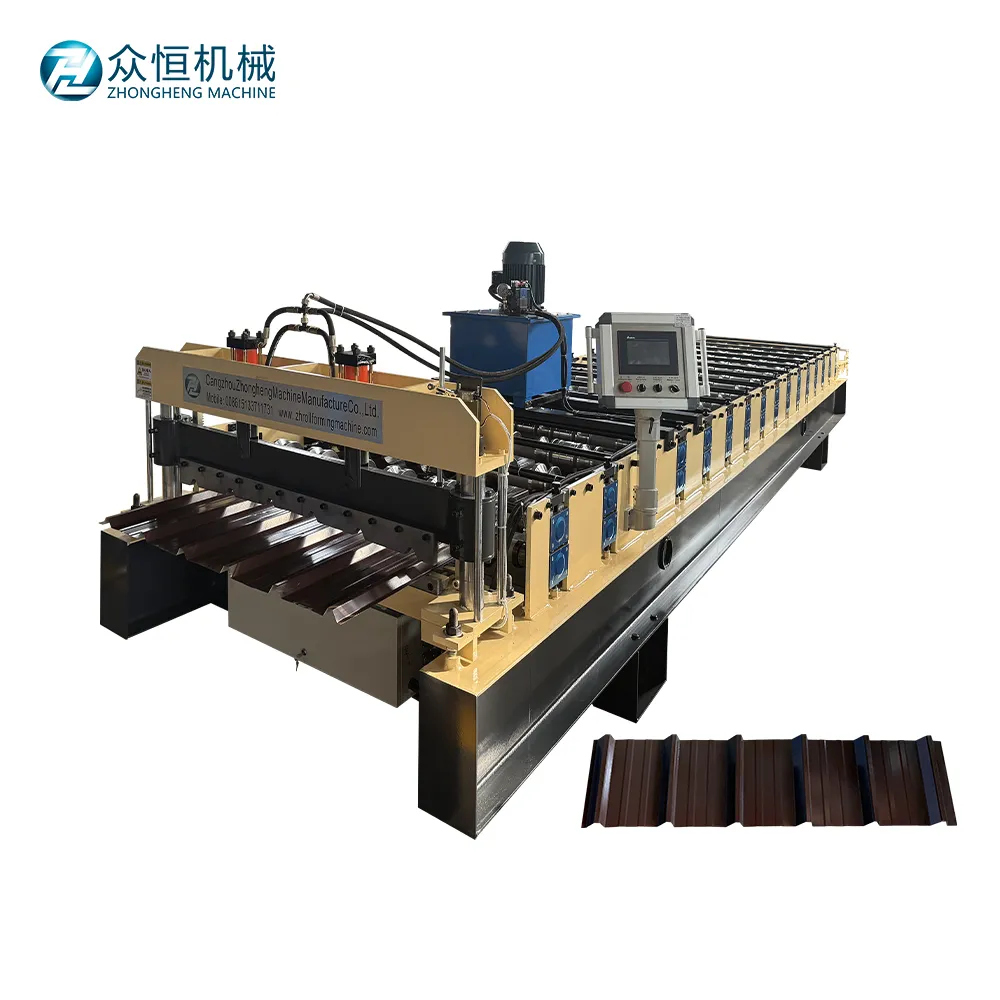
Advantages of Roll Forming
Roll forming offers numerous advantages. Its "assembly line" efficiency allows for the mass production and cutting of long metal strips, reducing costs. Secondary processes such as stamping and welding can be integrated into the same production line. Profiles produced from roll-formed steel sheets are similar to those made from extruded aluminum.
Compared to other forming processes, roll forming can more easily manufacture lightweight steel parts, as wall thickness can be precisely controlled based on structural requirements. Roll forming can also be performed on materials that already have coatings or paint. Although hot forming can produce similar complex profiles, roll forming is done at room temperature, avoiding the risk of deformation and being more energy-efficient.
Given its many advantages, it is no surprise that roll forming is widely used in various industries, including automotive, home appliances, construction, agriculture, solar energy, and shelving.
Zhongheng Machine supplies the roll forming machine, offering a variety of cold roll forming machines.
The types of steel products offered by Zhongheng Machine include:
Hot-rolled pickled and oiled
Hot-rolled acid pickled and dry lubricant
Hot-rolled black
Galvanized
Galvanized annealed
Electro-galvanized
Cold-rolled
Stainless steel
High-strength steel
Advanced high-strength steel
Aluminum
Geometric Possibilities
The possibilities for geometric shapes are extensive as long as the cross-section is uniform, and even closed shapes can be included. Typical sheet thicknesses range from 0.004 inches (0.10 mm) to 0.125 inches (3.2 mm), but can exceed this range. The rolling process has little effect on length. Part widths are typically no less than 1 inch (2.5 cm) but can exceed 20 inches (51 cm). The main limiting factor is the profile depth, as rolling stress and surface speed differences increase with depth, typically limiting profile depth to within 4 inches (10 cm) and rarely exceeding 6 inches (15 cm).
The width tolerance of the cross-sectional shape can typically be maintained within ±0.015 inches (0.38 mm), and the depth tolerance can usually be maintained within ±0.060 inches (1.5 mm).
Productivity
Production speed largely depends on material thickness and bend radius; however, the number of stations or steps required also affects production speed. For 0.7-inch (18 mm) low-carbon steel with a bend radius 50 times the material thickness, production speed may be 85 feet per minute (26 meters/minute) at 8 stations, 55 feet per minute (17 meters/minute) at 12 stations, or 50 feet per minute (15 meters/minute) at 22 stations.
The time required to form a single product can be expressed by a simple function: t=
V
L+n⋅d
, where L is the length of the formed piece, n is the number of forming stands, d is the distance between stands, and V is the speed of the strip passing through the rollers.
Generally, the speed of a roll forming line can range from 5 feet per minute to 500 feet per minute (1.5 meters/minute to 152.4 meters/minute) or even higher, depending on the application. In some cases, the limiting factor is the stamping or cutting application.
Industries Utilizing Metal Roll Forming
Metal roll forming is highly versatile, making it applicable across a wide range of industries and sectors, including:
Automotive
Architectural
Construction
Industrial
Agricultural
Aeronautics
Technology
General metal fabrication
Some Typical Examples of Metal Roll Forming
Coil and Sheet Processing Roll Formers
Products:
Cut-to-length light and heavy gauge coil and sheets
Metal roofing and wall system panels
Standing seam
Corrugated
Tile
Shake
Shingles
Gutters
Downspouts
Automotive Components Roll Forming Equipment
Products:
Bumpers
Safety doors
Framing parts for cars and trucks
Drip rails
Flooring
Structural Framing Roll Forming Machinery
Products:
Purlins
Door framing
Window framing
Roof trusses
Flooring
Tube & Pipe Mills/Roll Forming
Products:
Mechanical tubing
Structural tubing
Automotive tubing
Energy pipes
Standard pipes
Other Roll Forming Equipment for Miscellaneous Parts
Products:
Garage doors
Metal scaffolding
Industrial and commercial shelving units
Lockers
Elevator walls and components
Silos (agricultural)
Chimneys
Railings and guard rails
Fencing parts
Appliance parts
Air ducts and venting products
Solar panel components

评论
发表评论